



dPNM ecosystem – innovative technologies for business growth and investments 8611

1568431684543132

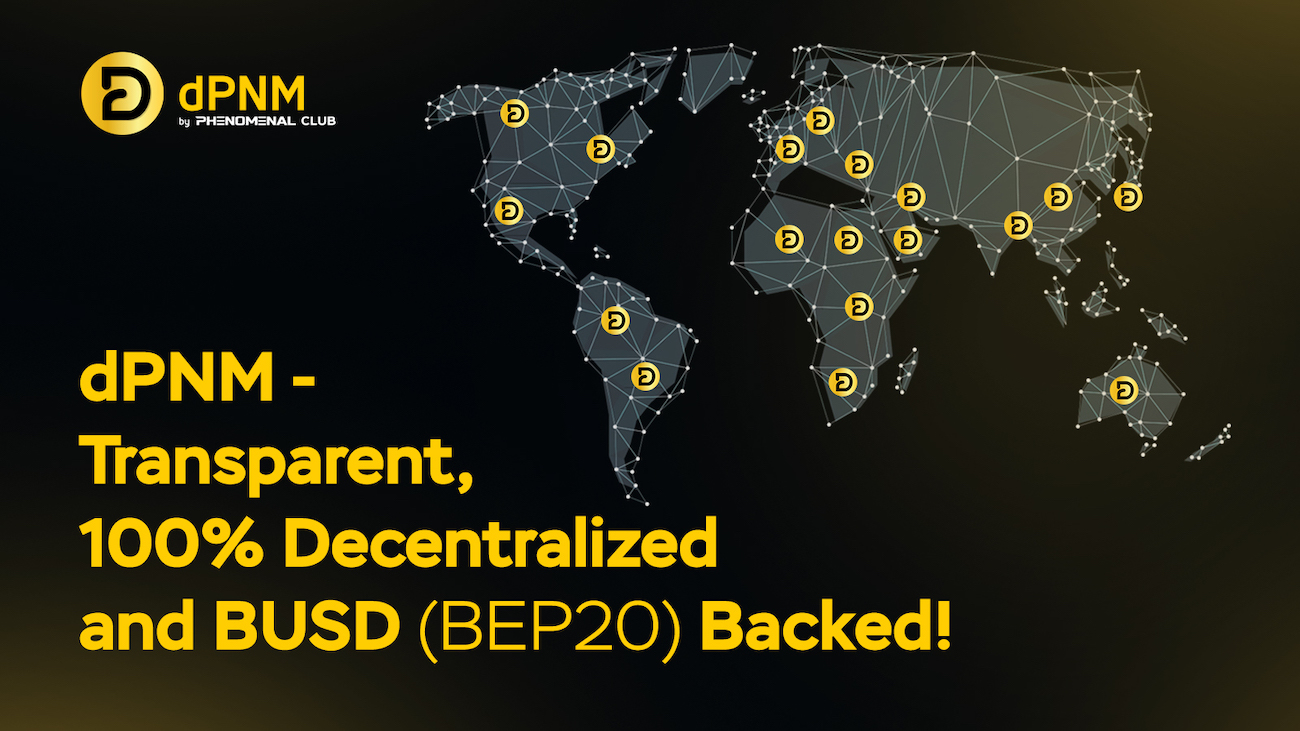
It is impossible to keep track of the emergence of new projects in the world of cryptocurrencies since this happens every day. In this article, we will talk about the dPNM ecosystem, the latest development of the eminent Binance Smart Chain.

Original data

All such projects are created by enthusiasts who believe in a bright future for cryptocurrencies, blockchain technology, and smart contracts. This system is no exception. So far, the project has no definite status, which means that dPNM is a completely decentralized ecosystem.

Who is responsible for stable work and rapid development? All this is happening with the help of a large crypto community and non-renewable smart contracts, which are the basis of the project. A peculiar feature of the technology lies in the impossibility of changing the contract created on the blockchain. Even the owners of the crypto key are not able to bring in anything new.

What provides this approach? 100% user confidence in the stability and immutability of the conditions. Another guarantor is the availability of the liquid pool only through a smart contract. All project transparency can be checked for 100% at any stage. Nothing here can be changed, deleted, or blocked after the procedure is completed.

Complete decentralization and deflation of the token, as well as its algorithmic nature, make it unique in the entire crypto market. It is based on the Financially Safe Assets algorithm and was used by Binance Smart Chain.

According to the creators, the token will constantly grow in value and will be completely safe. This is also confirmed by a large audit company that conducted an audit of three smart contracts of the new ecosystem.

Who is the creator and responsible for the upcoming dPNM boom?

Many crypto users have heard of Zokyo, a venture capital firm that invests primarily in DeFi and NFT projects. A feature of the company is the management staff – these are the developers of the protection of several of the largest companies in the cryptocurrency world. Therefore, the studio is also engaged in the protection of all kinds. It also brings together specialists from such fields as designers, crypto traders, investors, and many others. Such a backbone creates a company that deserves attention and respect.

dPNM Value and Liquidity Pools

The price of the token, according to the assurances of the developers, will only increase, and its fall is impossible for several reasons. The first and main one is the full provision of the token using a liquidity pool protected by smart contracts. Other factors included:

  • When purchasing a coin, each buyer pays a fee, ten percent of which is deposited in the pool to increase the value and ensure security.
  • To activate your account, you also have to pay the amount of ten BUSD and the same percentage of it will go to the pool.
  • The liquidity pool is also replenished from the remaining funds after the payment of rewards.
  • Creators replenish the pool with 5% of each token sale.
  • Each GWT transaction sends 1 US dollar.
  • Partnerships with other systems also bring replenishment to the project’s liquidity pool. Nearly half of this collaboration goes towards stability and price increases.
  • In total, the pool has more than ten different funding sources. In addition to affiliate and marketing services, there are cryptocurrency wallets, an exchange of decentralized cryptocurrencies, and much more.

Another advantage and a sign of stability and growth in value is the moment of sale under a smart contract that retains one hundred percent of the collateral. And the coin price algorithm allows you to be sure only in growth since the formula is designed to increase the cost and decrease the number of tokens. To maintain this principle of operation, the system has a clear limit on the daily number of coins that you can buy. Depending on the transactions made during the day, this number is constantly changing.

Cryptocurrency buying process

Of course, to purchase dPNM, you need a cryptocurrency wallet with the ability to connect to the Binance blockchain. One of the most sought-after, popular, and reliable options is the well-known MetaMask. Create BUSD (BEP20) in your wallet, and stock up on BNB to pay the fee.

To own tokens, it is necessary to be a member of the ecosystem. Sign up and pay ten BUSD to activate a new account and create a new spot in the marketing tree.

As of today, the limit for buying coins is 0.1% of the total pool. dPNM can be bought for no less than twenty BUSD and no more than fifty. For potential buyers, there is good news, because if you pay a commission of twenty percent of the transaction amount, it will be compensated in a ratio of one to one. The user will receive GWT in the same proportion. This token will not stand aside and will also be actively used, bought, and sold in the considered ecosystem.

Selling

Any monetary transaction is compensated in the ecosystem with the help of a GWT token specially developed for this purpose. And the sales commission is only ten percent, which will then be returned to the user in a different form.

What is the GWT coin? This is a token for returning paid commissions to all ecosystem participants. They can be used to activate new levels – there are ten of them in the marketing tree so far.

It is also possible to increase the income limit, since in the project 1 GWT is equal to 1.25 BUSD.

Another use is staking, as well as the ability to transfer to another user from the project. When staking, you can withdraw newly added coins immediately, without any time restrictions. The freezing of the main number of coins affects the profit – the longer this period, the more the participant receives.

What is the dPNM marketing tree?

This kind of affiliate program was created to increase the number of participants in the ecosystem and receive profit from attracting new users.

  • To receive any profit, you need to activate your account.
  • For the second one, dPNM should be purchased. You need to activate an account in this program monthly – only after that, the user will receive a profit.

Key advantages of dPNM as a token and ecosystem

The project has a lot of advantages and huge prospects:

  1. The maximum decentralization. The open-source code of the smart contract and the ability to manage it only with its help exclude any interference.
  2. The Algorithmic provides cost growth and one hundred percent security.
  3. The sale of coins makes it even more expensive.
  4. The liquidity pool is completely secure due to the lack of access to smart contracts.
  5. Manipulating the value of the token is impossible due to the presence of specialized technology to protect against cryptocurrency “whales”.
  6. The presence of a 100% deflationary model due to the burning of extra tokens.
  7. Each coin is issued only under 100% security and there can be no other options, which eliminates the initial issue.

Summary

The value of assets only grows in price and increases to the dollar equivalent, which makes not only the token but the entire ecosystem a fertile ground for the growth of any investment and their protection from possible inflationary changes.

The dPNM tree – how to get the most out of a project

The dPNM ecosystem has an interesting feature, which is a unique marketing policy. Its essence lies in the marketing tree of users, according to which a participant, having become part of the ecosystem, has the right to invite other people to the project, receiving certain bonuses for this. Active participation in the development of the user tree can provide a constant passive income. But for this, you will have to activate your account every month, the price of which is 10 BUSD.

Buying and selling a token

The dPNM ecosystem has specific rules regarding the purchase or sale of a token. We invite you to familiarize yourself with the main terms and conditions.

Fundamentals of buying dPNM

To buy dPNM cryptocurrency, you need to register a crypto wallet. For example, in the MetaMask system, which supports most types of tokens. The crypto account must be funded with at least 30 BUSD. Also, the account must have BNB coins. Done? Let’s go further!

Register and activate an account in the dPNM ecosystem. To do this, 10 BUSD will be withdrawn from your account. Wait for a message about your status in the marketing tree.

Start buying a token. Just remember that the platform sets a daily limit for the purchase of coins. You can purchase dPNM for a minimum of 20 BUSD(BEP20) and a maximum of 50 BUSD(BEP20).

When making a transaction, you will be charged a commission in the amount of 20% of the transaction amount, part of which will go to the pool, and part to the account of the ecosystem developers. But these costs will be compensated to the buyer by the GWT cryptocurrency in a ratio of one to one.

Note! The GWT token is a promising currency that is in demand in the dPNM ecosystem. All project participants must resolve issues of expanding income limits, to move to new levels of the ecosystem marketing tree, so it can be sold to other participants.

In addition, GWT can be used for staking. This is a passive income option. The essence of staking is that GWT is frozen for a certain time, and the owner receives every day 0.1% of the income from the frozen amount of tokens. If the freeze period is 1 year, then the reward amount increases to 0.5% per day.

dPNM sale

There is nothing easier than selling dPNM. You can do this at any day and time of the day. You don’t have to wait for approval to complete the deal. The token is liquid and orders for the sale of cryptocurrency are executed instantly.

When selling dPNM, you will have to pay a commission of 10%. But just like buying and selling dPNM, the system refunds the commission amount at a 1:1 ratio in GWT. In addition, you will be increased the limit for buying tokens by the same amount and two days!

Conclusion

Becoming a member of the ecosystem is the right decision! dPNM is the best way to save assets and a great way to earn money. Don’t miss your chance to be a part of this wonderful project!

Website: http://dpnmdefi.com

Previous ArticleNext Article

Quip.Network launches quantum-classical blockchain testnet, opens doors to global research community 331

More than 13,000 researchers sign up to participate in testnet to facilitate research and development in secure, trustworthy distributed quantum computing

Postquant Labs, the developer building Quip.Network, the first worldwide distributed quantum compute network, announced today that it has launched a publicly available quantum-classical blockchain test network (testnet). More than 13,000 people have signed up to participate in the testnet, which enables the global research community to experiment, collaborate, and contribute to advancing the intersection between quantum computing, blockchain technology and distributed quantum computing.

Built in consultation with D-Wave Quantum Inc. (“D-Wave”), the world’s leading quantum computing company, the testnet is designed to support the development and adoption of a global quantum blockchain standard. It is planned to also assess the role quantum computing could play in enabling a more secure and energy-efficient blockchain within a distributed computing network. The testnet uses D-Wave’s Advantage2 annealing quantum computers to solve complex optimization problems along with other computing platforms.

“Today, annealing quantum computers are starting to show performance advantages on useful optimization applications across logistics, manufacturing, and beyond, often delivering better results, faster, and at lower energy cost than classical-only solutions,” said Colton Dillion, CEO and co-founder of Postquant Labs. “Our goal is to make this quantum advantage accessible across a blockchain network, and we can begin to build the foundations for this today.”

Quip.Network’s testnet mining protocol is built around solving a set of computationally challenging optimization problems — a class of problems where D-Wave’s Advantage2 annealing quantum computer has demonstrated competitive performance relative to classical computing approaches. Researchers and developers are invited to participate in the testnet and compete for QUIP token incentives by solving these benchmark problems using quantum and classical computing resources, including CPUs and GPUs.

“The convergence of quantum computing and blockchain represents a powerful new frontier for secure, energy-efficient, and distributed computing,” said Dr. Trevor Lanting, chief development officer at D-Wave. “Quip.Network’s testnet provides a pathway for researchers to explore, understand and accelerate how quantum computing could enhance blockchain performance.”

“Quip.Network is open-source because quantum advantage shouldn’t be a marketing claim, but rather a verifiable result,” said Dr. Richard Carback, chief technology officer and co-founder of Postquant Labs. “We want the community running nodes and helping us harden the infrastructure. We want researchers to challenge our implementations and submit proofs of work optimized for their own processors.”

The network’s cross-chain architecture means users don’t need to move funds to a new blockchain to participate, and its post-quantum secure design protects user assets against emerging quantum threats. Quantum-resistant wallets are already deployed on EVM and Solana networks, with Bitcoin and other network support in development.

About Postquant Labs

Postquant Labs is building Quip.Network, the first decentralized, worldwide quantum computer. The network incentivizes both quantum and classical operators to contribute computing power, creating a trustless marketplace for quantum computing. Quip.Network’s quantum-resistant wallets are already deployed across multiple blockchains.

Uniblock Raises $5.2M to Operate Blockchain Infrastructure 418

Uniblock, the managed infrastructure layer for blockchain applications, has raised $5.2 million in funding ($7.5M to date). The round brings together investors across the US, Japan, India, Singapore, and the Solana ecosystem, including SBI, AllianceDAO, CoinSwitch, Blockchain Founders Fund, Hustle Fund, AAF Management, NGC Ventures, Alchemy, MoonPay among others, with angel participation from executives at Kraken, Uber, and CoinList.

Alongside the raise, Uniblock has shipped a suite of AI-native developer tools built for how blockchain development actually happens today.

The Infrastructure Problem

Blockchain infrastructure has entered a new phase. Stripe has entered the crypto arena in a big way with its $1.1B acquisition of Bridge for stablecoins, Privy for wallets and now Tempo, its own Layer 1 blockchain for payments, with Mastercard, Visa, and UBS already testing on the network. Mainstream media networks broadcast Polymarket prediction market odds in live news tickers alongside war coverage and election results. Tokenized assets trade on regulated exchanges.

At the same time, AI agents are beginning to read and write blockchain data autonomously, and developers increasingly build through AI coding assistants rather than reading documentation line by line.

No single blockchain data provider covers every chain an application may need. No single provider can guarantee uptime. Without a managed orchestration layer, every team builds and maintains its own routing and fallback system. AI agents face the same fragmentation with less tolerance for it.

Uniblock Today

Uniblock operates the managed infrastructure layer between blockchain applications and the 55 data partners they depend on. One API key provides access to over 300 blockchains and more than 3,000 APIs, with patented auto-routing that handles provider selection, failover, and data normalization. Over 3,000 projects and 4,000 developers run on the platform. Customers including Plume Network, Stellar Blockchain, Hypernative, Oku Trade, nReach, and Apechain run production workloads. Plume Network and Apechain run Uniblock as managed RPC infrastructure through ecosystem partnerships.

AI-driven API consumption is a growing segment on the platform. It accelerates Uniblock’s own development, powers the product’s intelligent routing engine, and represents a new category of infrastructure consumer.

AI-Native Developer Tools

Alongside the raise, Uniblock has shipped a suite of AI-native developer tools designed for how blockchain development happens today:

  • MCP Server. AI agents call Uniblock’s unified APIs directly with no humans in the loop. Live at a public endpoint.
  • LLM-Optimized Documentation (llms.txt). Structured API reference built for AI consumption. When a developer’s AI assistant queries Uniblock integration details, the answer is accurate.
  • Agent Skills. Ready-to-paste context for Claude, Codex, Cursor, and other AI coding environments. Developers drop these into their IDE so the AI writes correct Uniblock integration code on the first attempt.

“Two shifts are happening at once. Mainstream companies are bringing production workloads to blockchain, and AI agents are starting to read and write chain data autonomously. Both need the same thing: reliable infrastructure across hundreds of chains. That’s what Uniblock runs.”
Kevin Callahan, CEO and Co-Founder, Uniblock

“The next wave of blockchain adoption will depend on infrastructure that simplifies an increasingly complex ecosystem while maintaining dependable performance. Uniblock is building exactly that through a single API layer that simplifies multi-chain access for developers, enterprises, and AI-driven applications, and we are pleased to support the team as it enters this next phase of growth.”
Eiichiro So, CEO & Managing Director of SBI Ven Capital

“Stripe bought Bridge for $1.1B. Visa is embracing onchain. AI agents are transacting autonomously. All of them need reliable multi-chain infrastructure. Uniblock built it. 3,000 projects already run on the platform and that number only grows from here.”
Aly Madhavji, Managing Partner, Blockchain Founders Fund

Use of Funds

Capital will accelerate platform expansion: deepening chain coverage, scaling the intelligent orchestration engine, and building new API categories including stablecoins, wallets, and prediction markets. Investment continues in AI developer tooling, enterprise go-to-market, and ecosystem partnerships across the US, Japan, India, Singapore, and the Solana ecosystem. The team is scaling engineering and operations from its Canadian headquarters.

About Uniblock

Uniblock is the managed infrastructure layer for blockchain applications. A single API connection provides access to 300+ blockchains and 55 data partners through patented auto-routing with intelligent orchestration. AI-native developer tools, including an MCP server, LLM-optimized documentation, and Agent Skills, are live and in production. 3,000 projects and 4,000 developers run on the platform. Headquartered in Canada. Visit uniblock.dev.

STARTRADER Launches Web STAR Copy to Expand Social Trading Capabilities 595

New website feature empowers traders with greater control, flexibility, and confidence through strategy sharing and automated trade replication.

STARTRADER has introduced Web STAR Copy, a new web-based feature designed to simplify access to copy trading and enable more structured participation in financial markets. The feature allows traders to follow and copy strategies from experienced participants, improving execution consistency and overall trading efficiency.

As demand for social and copy trading grows among retail traders, Web STAR Copy offers a more structured way to participate, allowing users to create a dedicated account via the STARTRADER Client Portal and choose to act as either a Signal Provider or a Copier.

Experienced traders can monetize their strategies, while Copiers can follow proven approaches and trade with less reliance on manual execution.

The feature is built to enhance transparency and confidence. Strategy pages provide clear visibility into key performance metrics, including returns, trading activity, and the number of active Copiers, enabling users to evaluate strategies based on real data and make more informed choices.

Web STAR Copy also gives traders greater flexibility in how they participate. Copiers can tailor how trades are copied according to their individual preferences, while integrated risk management settings help control exposure and protect capital in changing market conditions.

In addition, users benefit from full visibility and control over their trading activity, including real-time positions, transaction history, and profit-sharing summaries. Flexible management options allow traders to adjust their participation at any time, ensuring a more responsive and controlled trading experience.

“Web STAR Copy reflects our focus on building a more connected trading ecosystem, where transparency and trust support long-term participation. We are continuously evolving our offering to give traders the confidence to engage with the markets in a more structured and reliable way.” — Peter Karsten, Chief Executive Officer, STARTRADER

The introduction of Web STAR Copy reflects STARTRADER’s ongoing commitment to enhancing its digital trading ecosystem by developing features that support collaboration, strategy sharing, and flexible participation for traders worldwide.

About STARTRADER

STARTRADER is a global broker that provides its clients with opportunities to trade financial instruments online. STARTRADER serves both Partners and Retail Clients, who can trade using the MetaTrader Platform, the STAR-APP, and STAR-COPY.

As a global broker, STARTRADER holds a client-first approach as its core principle. Regulated in 5 jurisdictions (ASIC, FSA, FSC, FSCA, and CMA), STARTRADER upholds strong governance and sustainable growth. STARTRADER’s team comprises dedicated professionals working collaboratively to deliver quality service to its Partners and Clients.

TradFi-DeFi Convergence Accelerates as Real-World Asset Tokenization Gains Institutional Momentum 1364

I-ON Digital, Instruxi and RAAC partnership illustrates emerging infrastructure linking gold-backed assets, stablecoins, and on-chain liquidity markets

The convergence of traditional finance (“TradFi”) and decentralized finance (“DeFi”) is moving from concept to implementation, as real-world asset (RWA) tokenization begins to establish a new foundation for global capital markets.

For small-cap investors and institutional observers alike, this shift represents a critical inflection point: the emergence of infrastructure capable of connecting regulated, asset-backed financial systems with blockchain-based liquidity and settlement networks.

From Fragmentation to Integration

Historically, TradFi and DeFi have operated in parallel:

  • TradFi offers regulatory structure, institutional trust, and deep capital markets
  • DeFi delivers programmability, continuous liquidity, and capital efficiency

Bridging these systems has remained a central challenge until the recent rise of tokenized RWAs, which allow tangible assets to be represented, financed, and deployed on-chain.

Market participants increasingly view RWA tokenization as one of the most significant growth vectors in digital finance, with long-term projections ranging into the hundreds of billions, and potentially trillions, of dollars.

Infrastructure in Practice: I-ON Digital and RAAC.io

A growing number of platforms are now moving beyond theory, building integrated systems that connect asset origination, stablecoin issuance, and decentralized liquidity.

I-ON Digital Corp., in partnership with Instruxi (https://www.instruxi.io/) RAAC (https://raac.io), provides a case study in how this convergence is being operationalized.

At the core of this model:

  • Digitized Gold-Backed Assets (IONau): Real-world gold exposure is structured into a blockchain-compatible financial instrument designed to align with traditional secured asset frameworks.
  • Stablecoin Layer (pmUSD): These assets support the issuance of pmUSD, a stablecoin engineered to maintain stability through structured collateralization tied to underlying real-world value.
  • Liquidity Infrastructure: pmUSD is deployed across established decentralized finance protocols and liquidity pools, enabling yield generation, market depth, and continuous capital deployment.

This vertically integrated approach, linking asset backing, issuance, and liquidity, addresses one of the primary limitations of earlier digital asset models: the disconnect between real-world value and on-chain utility.

The Role of Liquidity: From Concept to Market Depth

A defining feature of the next phase of digital finance is not simply tokenization, but liquidity at scale.

Deep, programmatic liquidity pools surrounding instruments like pmUSD are critical for:

  • Efficient price discovery
  • Scalable yield generation
  • Institutional-grade entry and exit pathways
  • Reduced volatility through structured collateral frameworks

By establishing liquidity infrastructure alongside asset issuance, platforms can move beyond static token models toward dynamic financial ecosystems capable of supporting meaningful capital flows.

Why It Matters for Small-Cap Investors

For investors focused on emerging growth sectors, the TradFi-to-DeFi bridge represents a foundational shift comparable to the early development of electronic trading or exchange-traded funds.

Key considerations include:

  • Early Infrastructure Positioning: Companies building compliant, scalable rails may capture disproportionate value as adoption accelerates
  • Institutional Tailwinds: Evolving regulatory clarity around stablecoins and digital assets is lowering barriers to institutional participation
  • Expanded Addressable Markets: Tokenization introduces liquidity and accessibility to asset classes historically constrained by geography or structure
  • Compounding Network Effects: Integrated ecosystems—combining asset backing, stablecoins, and liquidity—can scale rapidly as usage increases

A Structural Shift in Capital Markets

The integration of TradFi and DeFi is increasingly being viewed not as a replacement of existing systems, but as an extension that enhances efficiency, transparency, and capital mobility.

As real-world assets move on-chain and liquidity infrastructure matures, the ability to seamlessly connect regulated financial assets with decentralized markets may define the next generation of financial leaders.

About I-ON Digital Corp.

I-ON Digital Corp. is a U.S.-based digital asset infrastructure company focused on real-world-asset tokenization, regulated gold-backed digital instruments, and digital asset banking services. The Company’s platform enables institutions to digitize, tokenize, manage, and distribute physical and in-situ assets within compliant, treasury-grade frameworks.

Soter Insure Issues World’s First Ethereum-Denominated Slashing Insurance Policy 1575

Soter advances digital asset risk management through a novel ETH-denominated slashing product, providing stakers with native-asset indemnity and eliminating FX gaps in legacy insurance policies.

Soter Insure, a provider of institutional-grade insurance for the digital asset economy, today announced the launch of the world’s first Ethereum-denominated slashing insurance product. Developed in collaboration with Galaxy Digital, this innovative policy provides a critical safety net for Ethereum validators and institutional stakers.

As Ethereum staking becomes a cornerstone of institutional portfolios, “slashing”, or the penalization of a validator for protocol violations, remains a primary technical and operational risk. This penalty is denominated in ETH, while traditionally, insurance for such events was capped in fiat (USD), leaving institutions exposed if the price of ETH surged during the policy period. Soter’s new product solves this by denominating both premiums and claims in ETH, ensuring that the protection scales perfectly with the value of the staked assets.

Risk-Aligned Protection for the Staking Ecosystem

The policy provides comprehensive coverage for ETH stakers, covering financial losses from both isolated and network-wide slashing events, settled entirely in native ETH. By settling claims directly in ETH, Soter removes the “currency risk” associated with currency mismatch.

“As Ethereum’s Proof-of-Stake architecture becomes more widely adopted by traditional financial institutions, institutional participants require sophisticated risk-transfer mechanisms that extend beyond mere technical redundancy,” said Henson Orser, Founder and CEO of Soter. “By collaborating with Galaxy Digital, we have engineered a capital-efficient solution that eliminates the currency risk inherent in traditional indemnity. This ETH-denominated framework ensures that institutional stakers can safeguard both principal and yield through a core risk-mitigation tool that is intrinsically aligned with their digital asset balance sheets.”

Strengthening Institutional Infrastructure

This new slashing product complements Soter’s existing suite of BTC-denominated crime policies and traditional fiat-denominated financial lines coverage. By addressing the specific nuances of Proof-of-Stake (PoS) mechanics, Soter is providing the necessary infrastructure for the next wave of institutional ETH adoption.

The successful rollout of this product demonstrates that the insurance industry is no longer playing catch-up; it is now building bespoke solutions that enhance the robustness of the entire digital asset ecosystem.

“As institutional participation in Ethereum deepens, having coverage that is native to the protocol is a natural and important evolution for the ecosystem,” said Chris Ferraro, President and CIO at Galaxy. “We’re proud to have worked with Soter to develop this product and look forward to utilizing it ourselves.”

Empowering the Next Generation of Staked ETH ETFs

The launch of Soter’s ETH-denominated slashing product arrives at a critical juncture as major asset managers look to evolve their spot ETH offerings into Staked ETH ETFs. By providing indemnity exclusively in ETH, Soter ensures that any insured slashing penalties are replaced in kind. This native settlement removes the basis risk inherent in fiat-denominated policies, where price fluctuations could prevent a full recovery of the insured principal.

About Soter Insure

Soter Insure is a leading provider of specialized insurance solutions for the institutional digital asset ecosystem. Soter offers a range of innovative insurance products—including D&O, Professional Indemnity, and natively-denominated crime and slashing cover—that address the unique risks of the blockchain ecosystem. For more information, please visit soter.insure.

About Galaxy

Galaxy Digital Inc. is a global leader in digital assets and data center infrastructure, delivering solutions that accelerate progress in finance and artificial intelligence. Our digital assets platform offers institutional access to trading, advisory, asset management, staking, self-custody, and tokenization technology. In addition, we develop and operate cutting-edge data center infrastructure to power AI and HPC workloads. Our 1.6 GW Helios campus in Texas positions Galaxy among the largest and fastest-growing data center developers in North America. The Company is headquartered in New York City, with offices across North America, Europe, the Middle East, and Asia. Additional information about Galaxy’s businesses and products is available on www.galaxy.com.

Fi-Tek Launches AI-Powered Innovation to Disrupt Wealth and Trust Industries 1703

The wealth and trust industry is at an inflection point. Rising client expectations, growing regulatory complexity, and increasing operational demands are pushing banks, wealth management firms, and trust organizations to seek smarter, more efficient ways to operate. For firms that manage sensitive financial data and high-stakes client relationships, the pressure to modernize, without sacrificing security or governance, has never been greater.

Fi-Tek LLC, a leading provider of technology solutions for the wealth and trust industry, is answering that call. The company has announced the full production rollout of its artificial intelligence strategy – a purpose-built initiative designed to enhance operational efficiency, strengthen decision-making, and streamline workflows across the wealth administration lifecycle.

At the heart of this initiative is GWiz, Fi-Tek’s AI ecosystem built to extend and enhance its Global Wealth Enterprise Suite (GWES). GWiz brings intelligent, enterprise-grade AI directly into the day-to-day operations of wealth and trust professionals – enabling natural language access to institutional knowledge, AI-powered document intelligence for trust administration, and automation of complex back, middle, and front office processes.

Critically, Fi-Tek’s AI capabilities are hosted entirely within a secure AWS cloud environment, ensuring sensitive client data is never exposed to public large language models. With strict authentication protocols, IP whitelisting, and rigorous governance controls, firms can harness the power of AI while maintaining full regulatory compliance.

Fi-Tek has already identified more than 40 AI-driven use cases across the wealth administration lifecycle, with several now live in production. A dedicated internal AI team, comprising AI engineers and cloud technology specialists, continues to expand the GWiz ecosystem, with an agentic integration layer on the horizon to connect third-party tools and consolidate workflows across systems.

In the words of Suvo Chatterjee, VP Product and Technology, “Our goal is to deliver AI capabilities that empower wealth and trust professionals – not replace them. By combining industry expertise with modern AI technologies, we are helping firms operate more efficiently while continuing to deliver the high-touch service their clients rely on.”

www.Fi-Tek.com