



Billionaire Elon Musk Lauds Bitcoin As “Quite Brilliant,” Why Isn’t Tesla Going Crypto? 2628

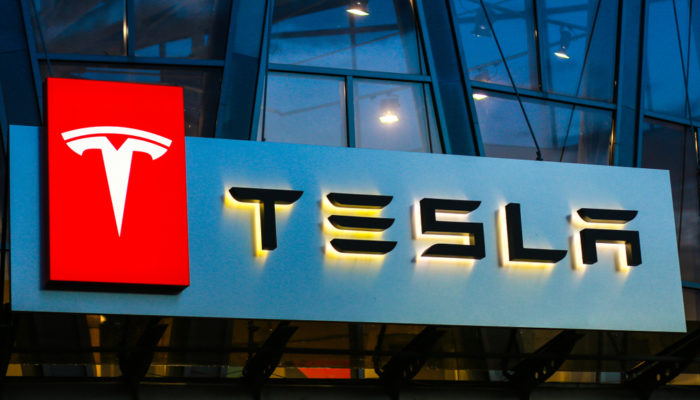
While Elon Musk has yet to formally delve into the Bitcoin space, he has long been a fabled member of the crypto community. Since finding his way to the headlines of the world’s media, the Tesla chief executive’s pro-innovation mindset has struck a chord with many enamored with cryptocurrencies.

In fact, some say that Musk’s unsaid raison d’etre of bettering society at large, especially by amending the world’s most harrowing issues (climate change, confinement on Earth, financial inequality), lines up with the goals held by many cryptocurrency insiders.

Thus, some have even argued that Musk could be Satoshi Nakamoto. Sahil Gupta, a former intern at Musk’s second multi-billion dollar enterprise SpaceX, once infamously claimed that Musk’s brief mentionings of cryptography, economics, the C++ computing language, along with the entrepreneur overarching vision scream Satoshi. The South African-Canadian entrepreneur has done his best to keep his mouth zipped regarding his candidacy for the Satoshi title, but that hasn’t stopped him from talking about cryptocurrencies.

Bitcoin Is “Quite Brilliant”

While the crypto market has remained in a depressed state, save for Monday’s jaw-dropping rally, stars have begun to descend on this industry. Weeks ago, NewsBTC reported that a mass of celebrities, including the Spice Girl’s Mel B, Johnny Depp, Madonna, and Lionel Messi, had some involvement in cryptocurrency. More recently, Jack Dorsey of both Twitter and Square took to Joe Rogan to claim that the native currency of the Internet is likely to be Bitcoin.

Related Reading: Twitter CEO Loves Lightning on Bitcoin: is it the Future of Fast, Instant Payments?

And just on Tuesday, Elon Musk, the most well-known Silicon Valley guru, took to the New York-based ARK Invest’s “FYI” Podcast to touch on Tesla’s plans, autonomy, other innovations, such as crypto. Per The Block, who compiled his comments regarding cryptocurrencies, Musk made his comments with explicitly bullish tones.

After discussing Tesla’s most recent advancements, the hosts of the podcast, the CEO and an analyst at ARK, a disruptive innovation-centric investment group, took a brief aside. They asked Musk if he agrees with Dorsey’s recent comments on Bitcoin and cryptocurrencies at large. Interestingly, Musk responded with an answer, albeit somewhat cursory.

He tacitly agreed, noting that the “Bitcoin structure was (is) quite brilliant,” adding that Ethereum and “maybe some of the others” have merit too. Musk did admit that he isn’t too enamored with Bitcoin’s Proof of Work (PoW) consensus mechanism, noting that it is energy intensive.

Yet, he explained that fundamentally, crypto assets are great as they bypass currency controls, especially in nations embroiled in financial and political turmoil, like Venezuela. He added that cryptocurrencies are also a “far better way to transfer value than pieces of paper,” subsequently quipping that he’s sure of this “without a doubt.”

In spite of all this, he made it clear that Tesla isn’t going to foray into the crypto space in any capacity, noting that it would be a good use of his firm’s resources to prop up an offering.

Musk’s abrash comments quickly elicited responses from each and every corner of the crypto space. Matt Odell, a long-time pro-Bitcoin coder and industry personality, joked that the comments “confirmed” his bias that cryptocurrencies could oust banknotes. Changpeng “CZ” Zhao of Binance noted that eventually, “[Musk] will join the brotherhood,” adding that he is unequivocally sure that the businessman will take up a crypto mantle. CZ notably called on the Tesla founder to take up the Lightning Network Trust Chain torch last week, just days after Twitter’s Dorsey openly lauded Bitcoin in dozens of tweets.

Crypto Is Better Than Banknotes?

While Musk made notable acknowledgments in his brief appearance on ARK’s “FYI,” what stood out to many crypto investors was his thoughts on the dichotomy between banknotes & physical cash, and crypto assets, not centralized e-money. For a brief recap, Musk simply stated that he is unequivocally sure that crypto, whether it be Bitcoin, Ethereum, or otherwise, is a “far better” medium of exchange than pieces of paper. Shocking, right?

This may be deemed hearsay by pundits of the legacy world, but the world is already adopting digital mediums of exchange. Per previous reports from this outlet, Arthur Hayes of BitMEX took to his company blog to claim that platforms like WeChat Pay and AliPay have already begun to take over China’s financial system. Who’s to say that cryptocurrencies, a decentralized counterpart to these systems that tout their own currencies, cannot have a similar impact on society at large?

The fact of the matter is that these digital payments systems, whether decentralized or centralized, offer benefits that cash/plastic cannot. Case in point, payments on both Bitcoin and WeChat Pay are cheap, rapid, and relatively secure. But arguably, decentralized payment ecosystems, which are non-sovereign, private, immutable, and non-censorable, are even better than their centralized peers, which is likely what Musk was touching on.

Previous ArticleNext Article

Nucleus Security Unveils Major Platform Innovation for Faster, Smarter AI-Driven Exposure Management 579

Nucleus 3.0 delivers AI-driven vulnerability intelligence, a unified query language, and enterprise-grade flexibility to accelerate vulnerability operations

Nucleus Security, the leader in unified vulnerability and exposure management, today announced the conclusion of their winter 2025 customer launch week, with five product announcements, including the introduction of Nucleus 3.0, next-generation exposure management platform. With this launch, Nucleus is redefining innovation in exposure management to transform how teams reduce risk, measure progress, and respond to threats with speed at scale.

“For years, security teams have been drowning in vulnerability data but starving for outcomes. Nucleus 3.0 is the next generation of exposure management, not as a concept for the future, but as a reality for today. With these releases, we are delivering the advanced workflows the industry has been waiting for, empowering our customers to move beyond traditional VM and solve critical challenges right now,” said Scott Kuffer, Co-founder and Chief Product Officer.

As cloud computing, modern application development, and the proliferation of AI radically alter enterprise IT, Nucleus 3.0 is designed around three strategic pillars that define the next phase of enterprise exposure management.

Context: Nucleus unifies fragmented security data, business information, and AI-enriched threat intelligence into a single operational view and unified language, enabling teams to understand their risk, automate prioritized action, and communicate measurable outcomes regardless the size of the organization.

Speed: Nucleus slashes the time from question to risk reduction and real-time intelligence that turn raw data into instant answers and live collections, driving risk-prioritized action in seconds and accelerating remediation while minimizing exposure windows.

Flexibility: Designed to adapt to fit your organization and processes with custom risk models, role-based experiences, and modular workflows that align remediation with business priorities, giving every stakeholder, from developers to the CISO, risk clarity and focus.

New enhancements include:

Nucleus Query Language (NQL): Establishes a common language across the entire Nucleus Data Core including assets, business context, findings, threat intelligence, software stack, and more. With a single interface, NQL transforms fragmented data into contextual risk visibility for all consumers of Nucleus platform data. Armed with this knowledge, enterprise organizations can prioritize actions, accelerate remediation efforts, and mitigate the most significant business risks.

All Findings Page The first NQL-powered UI page is “All Findings”, enabling users to ask any question across the entire Nucleus Data Core. This unified search, reporting, and visual experience transforms ad-hoc searches into living, governed data collections aligned to teams, roles, and business functions. Upcoming expansions of NQL findings, datasets, filters, and functions will unify compliance, resolved, and historical findings over time. This democratizes security data, allowing developers and executives to instantly query complex environments and build live, role-specific views that drive faster, more collaborative remediation.

Nucleus Model Context Protocol (MCP) Server: A governed AI framework that enables secure, auditable natural-language interactions and automation across exposure and risk. Allows teams to leverage the speed and ease of Generative AI safely, connected AI agents, and tools, while using the Nucleus Data Platform to analyze risks and automate workflows without sacrificing the data privacy, security, or auditability enterprises demand.

Customer Risk Score: Customers can now create or leverage their specific risk scoring algorithm from scratch. These scores can be fully operationalized in Nucleus’s dynamic -automation engine. Upcoming Nucleus release will allow customers to apply their custom risk scores to vulnerability views by default. This cuts through the noise of generic alerts, enabling organizations to prioritize fixes based on their own business context and operational realities rather than conflicting vendor scores.

Nucleus Insights General Availability: Nucleus has entered the vulnerability intelligence space as a 1st party intelligence provider. With high-scale, operations-driven data aggregation capabilities, Nucleus Insights collects, curates, analyzes, and provides top-tier vulnerability intelligence. Leveraging AI-powered research, analyst algorithms, and proprietary validation technology, it delivers the highest quality real-time vulnerability intelligence. Direct integration into the Nucleus platform enables users to automate threat-informed action for over 300,000 CVEs to drive down risk effectively.

Analyst Insights

Michelle Abraham, Senior Research Director in IDC’s Security and Trust Group

“Enterprises are realizing that fragmented vulnerability management cannot support modern risk reduction goals. The next generation of exposure management must leverage intelligence, context, and automation in a single operational model that closes the gap between insight and action. With a unified risk language, Nucleus 3.0 advances organizations’ ability to respond with speed, precision, and measurable impact.”

Tyler Shields, Principal Analyst, Omdia

“As exposure management matures and AI agent adoption increases, context becomes the driving force behind meaningful risk reduction. It’s not enough to see more. Organizations need to understand in detail and act faster with context and precision. The next generation of exposure management platforms will be defined by their ability to operationalize context across fragmented data, automate decisions, and adapt to the unique nature of every enterprise. Nucleus 3.0 is driving towards this vision.”

Availability

The first foundation of the Nucleus 3.0 platform is available in preview to all customers today.

About Nucleus Security

Nucleus Security is the enterprise leader in unified vulnerability and exposure management, enabling organizations to prioritize and mitigate vulnerabilities faster, at scale. Delivering unmatched time to value, Nucleus automatically unifies and organizes data from all your security and business tools into a single pane of glass. With powerful dynamic automations, teams can effectively automate their vulnerability management program. As a FedRAMP authorized vendor, Nucleus Security is transforming how enterprises, federal agencies and defense contractors secure their digital assets and networks.

To learn more about Nucleus Security for Government, please visit: https://nucleussec.com/government/

For more information about Nucleus Security and its services, please visit: https://nucleussec.com/get-started/

Arkangel Fund SP Launches via CV5 Capital, Deploying Market-Neutral Digital Asset Strategy 651

A new digital asset hedge fund, Arkangel Fund SP, has been launched via the leading institutional digital asset manager, CV5 Capital, with an investment strategy led by Arkangel Wealth Management. The Fund implements a systematic, market-neutral quantitative strategy that aims to monetize short-lived micro inefficiencies across digital-asset markets. Using proprietary, high-frequency and low-latency models, the Fund harvests volatility and structural spreads through diversified alpha sleeves executed primarily on an intra-day horizon and hedged to maintain near-zero net beta.

Chris Coll-Beswick and Gold Darr, principals of Arkangel Wealth Management, are seasoned technology entrepreneurs and investors, with deep expertise spanning artificial intelligence (AI), web3, blockchain, and decentralized finance (DeFi).

“We are thrilled to launch the Arkangel Fund SP. The Fund offers investors a uniquely informed perspective on leveraging technology to navigate and capitalize on the future of institutional digital asset investments.The Fund is aimed at professional and sophisticated investors, supported by tier-1service providers under the CV5 Digital platform with a core focus on the governance and compliance expected of institutional investors globally. Arkangel Wealth Management has partnered with CV5 Capital, an industry-leading digital asset hedge fund platform, to ensure the highest quality services and operational excellence. CV5 Capital has become the leading platform for digital asset managers seeking to launch a regulated and audited digital asset fund from the world’s leading jurisdiction for hedge funds.David Lloyd, Chief Executive Officer of CV5 Capital: “We are delighted to assist and support the launch of the Arkangel Fund SP and look forward to supporting their growth for many years to come.”

About Arkangel Wealth Management Ltd

Arkangel Wealth Management Ltd an investment manager and regulated by the British Virgin Islands Financial Services Commission (BVI FSC) as an Approved Manager, with registration number IBR/AIM/25/2453.

About CV5 Capital

CV5 Capital is the platform manager of CV5 and CV5 Digital, Cayman-domiciled multi-manager hedge fund and digital asset fund platforms that enable investment managers worldwide to launch and operate alternative strategies with institutional governance and infrastructure. CV5 Capital is regulated by the Cayman Islands Monetary Authority under the Securities Investment Business Act (as revised). Funds on the CV5 and CV5 Digital platforms are regulated under the Cayman Islands Mutual Funds Act (as revised).

Salt Security Brings MCP Threat Protection to AWS WAF, Blocking AI Agent Abuse in Real Time 673

Salt Security, the leader in API security, today announced it is extending its patented, award-winning API behavioral threat protection to detect and block malicious intent targeting Model Context Protocol (MCP) servers deployed within the AWS ecosystem. Building on the recent launch of Salt’s MCP Finder technology, Salt now enables organizations to identify external misuse and abuse of MCP servers by AI agents and attackers, and automatically block these threats using its integration with AWS WAF.

MCP servers have rapidly become a key component of enterprise AI architecture, enabling LLMs and autonomous agents to call APIs, execute tools, and complete workflows. But they also represent a new threat vector. Deployed without central oversight and often exposed to the internet, MCP servers are increasingly targeted by adversaries for unauthorized access to critical data and system access.

With this new capability, Salt enables customers to use their existing AWS WAF deployments to block attacks on MCP infrastructure. The protections are informed by real-time behavioral threat data from Salt’s platform.

“Most organizations don’t even know how many MCP servers they have, let alone which ones are exposed or being abused,” said Nick Rago, VP of Product Strategy at Salt Security. “This capability lets them take action quickly, using existing controls to prevent real threats without needing to deploy new infrastructure.”

The solution is based on Salt’s MCP Finder technology, which provides full visibility into the MCP layer across external, internal, and shadow deployments. By combining that discovery with AWS WAF, customers can:

  • Automatically block MCP misuse and abuse before it impacts applications
  • Discover previously unknown or unmanaged MCP implementations and ensure traffic is routed through AWS WAF for inspection and protection
  • Extend AWS WAF edge protection to the AI action layer
  • Apply intent-based behavioral threat detection to stop attacks targeting key AI infrastructure that traditional tools miss
  • Continuously update protections based on evolving attacker tactics

Salt Security is showcasing these capabilities at AWS re:Invent 2025. The integration is available now as part of the Salt Security API Protection Platform.

About Salt Security

Salt Security secures the APIs that power today’s digital businesses. Salt delivers the fastest API discovery in the industry—surfacing shadow, zombie, and unknown APIs before attackers find them. The company’s posture governance engine and centralized Policy Hub automate security checks and enforce safe API development at scale. With built-in rules and customizable policies, Salt makes it easy to stay ahead of compliance and reduce API risk. Salt also uses machine learning and AI to detect threats early, giving companies a critical advantage against today’s sophisticated API attacks. The world’s leading organizations trust Salt to find API gaps fast, shut down risks, and keep their businesses moving. Learn more at https://salt.security

N4T Announces Liquidity Locking Ahead of DEX Listings 571

N4T, short for “Nobel for Trump,” a new movement-driven token, today announces that it will lock liquidity for the N4T token as it prepares for its debut across decentralized exchanges prior to listing on CEX platforms.

The decision follows the project’s successful ICO in November and marks the next major milestone in N4T’s roadmap as it transitions from its early fundraising phase to open-market participation. Following its introduction to the Ethereum network in November, N4T evolves from a peace-driven token and cultural blockchain experiment into a long-term, sustainable DeFi ecosystem.

By committing liquidity for a long-term period ahead of exchange listings and as the world’s first peace-driven token on Ethereum, N4T is building trust and confidence across its user base with long-term stability in mind. With applications underway, it plans to register on major data platforms CoinMarketCap and CoinGecko and to list the N4T token across major exchanges, including MEXC, Gate.io, BitMart, and BingX.

“Our community supported N4T from the moment we introduced our ICO,” said Erik Amirbai Lang, Co-founder of N4T. “Today’s move reinforces our commitment to building a stable, mission-driven ecosystem. As we prepare for DEX listings, liquidity locking signals that we are growing with purpose.”

The N4T token, minted on November 4, underpins the developing “peace-to-earn” ecosystem, rewarding holders for participating in message-driven digital activations. With 37% of the supply originally allocated to the public sale, airdrops, and community rewards, this framework remains key to incentivizing engagement as liquidity and exchange visibility grow.

About N4T

N4T (Nobel For Trump) is a movement-driven token that unites meme culture with peace advocacy. Built on Ethereum, N4T transforms digital engagement into a positive global message, demonstrating how blockchain and community power can be used to promote peace, recognition, and impact.

Learn more about N4T at n4t.io, and follow N4T on X at www.X.com/N4Tcoin.

Raindrop Raises $15 Million to Detect Critical AI Agent Failures 553

“Like Sentry, but for AI Agents” – Funding led by Lightspeed Venture Partners will enable Raindrop to meet enterprise demand and become the default monitoring solution for AI agents.

Raindrop, the monitoring platform for AI agents, announced $15M in seed funding led by Lightspeed Venture Partners. The funding will enable Raindrop to meet enterprise demand, and continue defining the frontier of production monitoring and issue detection for AI agents.

The round includes participation from leading AI companies including Figma Ventures, Vercel Ventures, founders of Replit (Amjad Masad and Michele Castata), Cognition (Walden Yan), Framer (Koen Bok and Joen van Dijk), Speak (Andrew Hsu), Notion (Akshay Kothari), and YC.

“AI agents are more capable than ever. They’re reasoning longer, using more tools, and connecting to MCP servers. Some agents now run autonomously for hours,” said Raindrop CEO Zubin Koticha. “Traditional testing methods, like evals, aren’t capable of handling the complexity of these long trajectories. This leaves engineering teams in the dark – unable to discover or track issues. Raindrop is the first monitoring platform to solve this problem.”

AI agents are increasingly entrusted with high-stakes tasks and deployed across critical sectors like healthcare and financial services; failures mean business-critical or even life-threatening issues. Recent headlines have been flooded by issues like ChatGPT encouraging users to stop taking medication or Air Canada being sued because their chatbot promised refunds they couldn’t honor.

Legacy monitoring tools for AI agents simply provided latency or token usage metrics. At best, they offered unreliable or generic metrics like toxicity or user sentiment. These metrics were not effective at revealing errors in AI agents.

Raindrop established the new standard for monitoring AI agent behavior: small, custom models that adapt to the unique shape of each AI product. This enables engineers to monitor signals that were previously invisible. For example, in addition to Raindrop’s default signals like “User Frustration,” customers can define custom signals like “UI Aesthetic Complaints” or “Agent Stuck in a Loop” and see incident rates over millions of events. Raindrop then triggers Sentry-style notifications when problems emerge.

To discover hidden issues, Raindrop’s AI agents work in the background to triage and investigate potential issue patterns. When a new issue is detected, like the agent encouraging toxic user behavior, Raindrop collects information on the issue and generates step-by-step explanations of what happened.

“We keep seeing AI engineering teams struggling with agent failures in production, and traditional evals are not really helping,” said Bucky Moore, Partner at Lightspeed. “We invested in Raindrop because they defined monitoring for AI agents. They made an early bet that monitoring would be the most critical part of building reliable agents, and they’ve been right. They’re growing fast as Raindrop is being embraced by some of the most forward-thinking engineering teams in AI. Lightspeed is thrilled to partner with Alexis, Ben, Zubin, and team to help them scale Raindrop into the default agent observability platform for enterprises and startups alike.”

Today Raindrop works with frontier AI customers processing millions of events each day to help quickly discover, monitor and resolve critical issues. Many of these teams use Raindrop Experiments, the first A/B testing platform for agents, to validate and iterate on solutions (tool, model or broader pipeline changes) and see if their fixes actually worked.

“Raindrop has been invaluable as we’ve been growing quickly,” said Evan Goldschmidt, CTO Tolan. “It’s critical for us to keep issue incidence below an acceptable threshold and become aware of any spikes. It’s like if we see an iOS crash report in Sentry, but for our AI capabilities.”

“Our founding team was building a coding agent ourselves and kept running into silent agent failures in production. When we did YC we saw everybody building agents in our batch had the same problem,” said Zubin Koticha, Raindrop’s CEO.

Raindrop was founded by Ben Hylak, Zubin Koticha and Alexis Gauba. Alexis and Zubin are second-time founders (previous company acquired by Coinbase); Ben was an engineer at Apple, before joining Apple’s elite Human Interface (HI) Design team where he worked for four years.

About Raindrop

Raindrop is an applied AI research company building “Sentry for AI agents” – monitoring infrastructure that catches when AI agents fail silently in production. Raindrop allows AI engineering teams to discover, track, and fix issues with their agents. Raindrop is backed by Lightspeed Venture Partners and other leading investors. https://www.raindrop.ai/

About Lightspeed Venture Partners

Lightspeed Venture Partners is a multi-stage venture capital firm focused on accelerating disruptive innovations and trends in the Enterprise, Consumer, Health, and Fintech sectors. Over the past 25 years, the Lightspeed team has backed hundreds of entrepreneurs and helped build more than 500 companies globally, including Abridge, Affirm, Anthropic, Cato Networks, Epic Games, Glean, Mistral, Moveworks, Navan, Netskope, Rubrik, Snap, Wiz and more. Lightspeed and its global team currently manage $30B in AUM across the Lightspeed platform, with investment professionals and advisors in the U.S., Europe, India, Israel, and Southeast Asia. www.lsvp.com

CIMG Inc.’s Tokenized Stock to Launch Publicly on FlowStocks 573

CIMG Inc. (“CIMG” or the “Company”), a business group specializing in digital health and sales development, which utilizes technology and marketing to enhance its business partners’ sales growth and commercial value, today announced that its tokenized stock, which it previously announced was authorized for issuance on the FlowStocks platform, has completed testing and has be officially launched for public trading on November 28.

The trading symbol for CIMG stock on FlowStocks is tIMG.

Starting November 28, 2025, CIMG shareholders will be able to tokenize their shares on FlowStocks, while the public can also purchase and transfer tIMG by depositing funds into their FlowStocks wallets.

Deposit instructions for the FlowStocks platform are as follows:

  • Click the menu bar in the upper right corner of the FlowStocks page, select [Connect Wallet], and connect a commonly used wallet (e.g., MetaMask, OKX Wallet, etc.).
  • Go to the product purchase page and click Deposit, or select [My Assets] -> [Deposit] from the menu bar. Choose the currency for deposit, enter the amount, and authorize the payment.
  • After the transaction is submitted successfully, wait for on-chain confirmation.
  • Return to the [My Assets] page to view your deposit history.

Clarification on Underlying Assets:

A total of 15,000,000 shares of CIMG—corresponding to this tokenization—have been fully transferred into FlowStocks Special Purpose Vehicle (SPV) and duly registered under the Transfer Agent (TA) system. These shares have been tokenized on-chain at a 1:1 ratio and minted as tIMG tokens, serving as the underlying asset backing for the token.

In the initial phase of the tIMG launch, CIMG and FlowStocks will jointly introduce incentive programs for purchasing tIMG, such as token rewards for users who reach certain deposit or purchase thresholds.

Alice Wang, Chairwoman and Chief Executive Officer of CIMG, stated, “We believe that stock tokenization is becoming a trend. It enables round-the-clock access to tokenized equity trading. By introducing tokenization, we are not only upgrading our financial infrastructure but also aiming to provide greater convenience for our investors.”

About CIMG Inc.

CIMG Inc. is a global business group in the digital health industry, built around cryptocurrency strategies. The company leverages AI and cryptocurrencies (such as Bitcoin and stablecoins) to drive industry growth, helping clients maximize user acquisition and brand management value. Its current portfolio includes brands like Kangduoyuan, Maca-Noni, Qianmao, Huomao, and Coco-mango.